Blog2026-03-31T20:50:12-05:00

Upcoming Classes & Events

Just Desserts Exhibition

Friday, April 10 - Saturday, April 18

Eco Creative Summit

Tuesday, April 21 - Wednesday, April 22

DCL: Travel Address Books

Tuesday, April 21 @ 1:00 pm - 3:00 pm CDT

Makers Market at DKA

Sunday, April 26 @ 11:00 am - 4:00 pm CDT

Artist Blog

Behind the Scenes Creating a Class: From Idea to Finished Project

Someone asked me recently about how I come up with ideas for classes and I thought it would be fun to talk through how I design a class from the first idea to a finished workshop. This owl project is a great example and it actually ended up turning into two different classes for me, which is great!

Where I got the idea

I teach often for the local county library system and we always ask students for an evaluation at the end of class. A couple of the comments mentioned that students wanted more classes with paper art and they loved a recent one we had done with recycled materials. The libraries also had a theme or mascot for their spring classes which was owls. So I decided to put those together into a class: making recycled paper owl ornaments.

I start with materials

You might be surprised to know that one of the considerations I think about right away is materials. I often have a materials budget per student that I need to stick to. This includes both acquiring the materials themselves, and also any time that it takes me to prepare them. So if I need to dye something or cut pieces or make mini skeins of yarn, I put that together with my materials costs. A recycled paper class isn’t a high cost for getting materials, but it does take time to source enough of everything to make up 43 kits. Sometimes that is more of a challenge than you might think. Even if I am teaching an in-person class, I think about materials and what is practical for students to acquire before class or what I need to supply to make it easy to come and jump right in to the project. For beginner classes, I don’t like to make anyone go out and purchase a bunch of bookbinding tools, for instance, before they have even taken the class to see if this is something they like doing. I usually sketch out the materials costs on a scrap of paper with some quick Google searches to make sure I can get everything I need within budget.

For the classes I teach with the libraries, we mail out materials kits because the classes themselves are held on Zoom, so there is also a size constraint so everything fits in the envelope. I also need to think about things that are practical to mail. Paint, liquid glue, and magnets, for example, aren’t the ideal things to put in the mail. For these Zoom classes, I try to limit what the students have to supply themselves to scissors, pencil and occassionally a ruler. Everything else is in the kit.

Figuring out learning goals

I like to also make sure that we aren’t just doing a cut-and-paste kind of project, but there is some kind of new skill that students are learning. Those skills could be something like a new embroidery stitch or a way to tear down paper.

So for these owls I decided that we would:

  • make an ornament with paper-covered chipboard, teaching bookbinding skills of making covered boards
  • create a mixed media illustration with mixed scrap papers and stickers
  • design our own patterned paper to help make colors blend/coordinate

Make a sample

Next I make a sample project. I am not really an artist who sketches everything ahead of time. I usually jump in and just start trying things. I have a couple of drawers of scrap paper in my studio, so I grabbed some scrap and started to make a project.

Fun fact: I looked at the date on this photo and I made this sample in June 2025. I didn’t teach this class until January 2026. I always take photos of samples and intermediate steps as I make them because there is often a huge lag between when I propose a project and when I actually teach it so I forget what I did.

As I made this sample I thought about how I would teach it to students. I decided to make pattern pieces for the head and body and have the students create the pieces for all of the other shapes. This would give them a starting point to get everything the right size to fit on the background and would help give some confidence about making your owl look like an owl. I made pencil sketches of the pieces I made and then re-drew them in Illustrator so I had pattern pieces I could print for them to cut out.

I decided to use little circle stickers for the eyes to give this a little more mixed media vibe and because cutting tiny circles is a pain-in-the-%$#@ and I don’t want to cause anyone to be frustrated. Ultimately I also made the entire piece slightly bigger than the one shown in the photo here because I decided that the pieces were too small to cut easily, especially for more beginner level students. Since I had drawn those pattern pieces as vector illustrations, this was easy to do.

Take photos.

Usually this is the point in a project where I write a class description and take some photos of my sample. When I am teaching classes, there is usually a “proposal” phase where I send something off to whoever I am partnering with for the class and they approve the idea before we move forward. Writing class descriptions is hard. I’ve learned over many years of doing it to be as concise and factual as possible. I’ve learned this the hard way as you might guess. Sometimes the people editing the description down the pipeline don’t understand anything about what I’m teaching and the class description ends up being something completely different than what I intended to teach.

Now we wait.

I try not to do any more prep than this until I have a signed contract. Rarely do teachers get paid anything for prep time. Unfortunately I have had venues ghost me or cancel projects at this point, so I am really careful about doing anything like making handouts or actually sourcing materials until I know it’s pretty sure that it’s going to go.

3 weeks out.

About three weeks before the class I start to look for materials. For larger classes, like the ones I do with the libraries, I might even start a little earlier to get materials on the way. I try to order things from other small businesses as much as possible. I rarely source materials locally, even though I would like to because it’s challenging to find enough of a thing to make up 43 class kits from a local shop. They just aren’t going to carry 43 skeins of the same color of yellow DMC floss. Some tools like popsicle sticks or glue sticks, that I use over and over in classes I buy in bulk if I can to keep the costs down. While some classes are pretty predictable (my library classes almost always fill up) others are a big guessing game. Many many people wait until the last minute to register for classes, so at 3 weeks out, I really have no idea how many people I will have in a class.

2 weeks out.

I make up materials kits. You’ve seen me mention the number 43 a bunch of times. For this class, I had 40 spots available, broken up into 2 class groups. I also make a kit for me that is identical to the student kits so we are all working with the same thing (42). I make one more so that I can make a class sample that is the exact materials that are in their kits (43). My prototype sample is almost always made with whatever I have scraps of in the studio so it’s a great alternate example, but it doesn’t always match exactly what they will be working with. I also make handouts and pattern pieces at this same time.

For the library classes, I drop off kits so the library staff can distribute them.

Today I am teaching a different class in person. I made up those kits just a few days before class because I wanted to not make too many and have leftovers. I have a better idea of how many students will be in a class a few days before it happens. For those classes I always make the number in the class plus three extra. One for me to work along with them and two more for people who show up and think they were registered even though they weren’t (it happens more than you might think). I had a woman spill her entire coffee all over her materials and the table once. I had an extra kit so she could start over.

The day before

I usually make up the class sample the day before class happens. I do this last minute because it means the class is super fresh in my mind. As I make the sample, I keep notes on a scrap of paper so I don’t forget key steps or do things out of order. This is kind of the point when I write the lesson plan. I often translate those sketched notes into a list of numbered steps with keywords for me to remember what to do next. If I’m teaching on Zoom that note usually sits on my laptop keyboard where I can see it but it’s just off camera. Sometimes with complex projects I put times on it so I make sure we stay on pace to finish on time, ie at one hour in to class we should be to this point.

I taught it, but then I taught it again

So after I taught this class, another group reached out to me and said we saw this class on your social media and we think this would be a great fit for this other event we are doing. Cool! So I talked to them a little bit and they wanted basically this same project but as a 25 minute class formatted as pre-recorded video. That’s a big change from the 2 hour class that I had planned earlier. I decided that I could do it by changing the skills focus of the class a little bit but keeping the same project.

The new goals were something like this:

  • demonstrate covering boards with decorative paper (not a step-by-step)
  • discuss how to curate papers/colors to make a cohesive design
  • demonstrate creating a mixed media illustration with bullet points vs working together

In order to cut the class down from 2 hours to 25 minutes, I changed all of the detailed step-by-step instructions into demonstrations with bullet points, more like a tutorial. I added a section about curating your recycled materials to make something that looked more intentional than crafty. For the original class, I curated the materials in their kits so we didn’t need to talk about that. But for this one they would be sourcing their own materials, so that felt like an important thing to talk about. The focus shifted more to the design of the project and away from the hands-on-skill building.

I already have a whole video setup and workflow to record a class so I sat down one afternoon and recorded it. I had my samples from teaching the class previously, so I had a lot of things to show for inspiration. My first draft of the video was way too long, so I had to cut a lot and speed up some of the sections where I was doing demos. I’m not used to teaching in such a short form, so this was a little more work, but I think I would get better if I did more like this.

Want to make an owl? This class is happening as part of a free Eco-Creative Summit in a couple of weeks, so if you are excited about this project you can sign up!

April 9th, 2026|An Artist's Life, Classes & Teaching|0 Comments

How did you get started in art?

A couple of weeks ago I posted something on my Instagram that said “I want to write a blog post, ask me a question” and one of the questions was “How did you get started in art?

I always made art as a kid. My family are very creative, make-things-with-your-hands kind of people. Many many Sunday mornings when I was a kid were spent going out for breakfast (everyone’s favorite) and then going to the hardware store to get the parts for whatever Sunday’s project was going to be. I knew the difference between a phillips and a slot head screwdriver when I was 3 years old.

My first summer job was working at a summer childrens’ theater called Storybook Island. I applied to work in the concession stand at the park, but they instead put me in the acting troupe and said I could make all the costumes. We had a $200 budget for all of the costumes for 5 shows of the season and there was a lot of creative use of t-shirts in various colors paired with an assortment of capes and aprons made from the cheapest fabric I could find. I hated the singing part of the job, loved the costuming, and met my future husband there. I worked for 5 summers at that theater. We were super lucky to be mentored by a fabulous puppeteer & performer named Markie and she taught me a lot about building and performing with puppets. I thought I was going to go to college and be a theater costume designer and write plays.

Things happened. I didn’t love the theater department where I went to college, especially the head of costumes. I swapped to be a theater education major, thinking I would be the fun drama teacher at a highschool somewhere. They cancelled that major when I was mid-way through and gave me the option to be a high school literature teacher (UGH!) or general education. So I scrambled around, picked up some extra credits and ended up with elementary & middle school certification with specialties in math, earth science, and theater.

Not art. That was a question I used to get asked a LOT when I was doing different kinds of shows out in the world. Where did you get your art degree? Do you have an MFA? And the answer is nope to both of those. I did take several art classes for my degree (ie teaching art to kids) and the professor I worked with a lot tried to get me to switch majors several times, but the only media that they offered at my school were painting, drawing, printmaking and metals. I really dislike painting. I didn’t know what printmaking was because I never took an art class in highschool. (I was too busy with band and theater.) There was nothing with fabric or paper or mixed media and it all just seemed too snooty to me at my wise old age of 20.

I made my first website in 1996 after I graduated, while I was waiting for my husband to finish his Masters. I worked as a secretary for a little while for the college’s Gifted and Talented summer camp and substitute taught at the school where I did my student teaching. I was bored. So I taught myself Photoshop and made a website for our puppy, Lucy Thunderpaw. There were games and coloring pages and animated gifs. It’s funny to me now, but this time I spent learning Photoshop and html on my own has been infinitely more valuable to me than most of my college classes.

There were complicated rules about teaching certification between states so when we moved to Minnesota, I wasn’t certified to teach and I wasn’t sure what to do. I worked part time for several years at a local highschool as the assistant theater coach and costumer, which I didn’t have to be certified for. A friend sent me a job posting from a place called the Textile Center to be a teacher for their school residency program called the Textile Mobile. I got a crash course in weaving, dyeing, felting and kumihimo and worked my first residency at an after school program making quilts and embroidered badges with middle school kids.

While I was working all these part-time jobs, I started making things to sell. On the weekends I wasn’t working, I did shows and had a table at a local farmers market, making and selling puppets. I made hundreds of kid-friendly fleece puppets of every animal I could think of. The lions and dinosaurs were the most popular, but I always liked this mallard duck.

Etsy also came on to the scene about this time. I opened my Etsy shop just 2 months after Etsy launched and I have had it ever since. I started on Etsy making tote bags, custom laptop sleeves and hand embroidered business card cases. I made friends with some of the original Etsy staff. I was on Etsy teams, co-captained a new sellers mentorship program, and even travelled to Etsy HQ to be a part of their Sellers Advisory Board. The biggest thing I learned from having an Etsy shop was how to take great photos of my work. It was HARD to figure out and I spent years taking mediocre ones before I finally figured out how to do it right. (I’ll give you a hint: the answer is you need more light.)

I worked kind of insane hours and never took a vacation, but I loved it. The Textile Mobile program was my entire life and identity for about 12 years. I eventually stepped full time into the education manager role for Textile Center and coordinated all ages and flavors of education programs for the center. I worked far more hours than I was ever paid for, learned to be the substitute teacher for everything, cleaned up bathrooms and noxious vats of leftover moldy dye, learned inDesign when a co-worker walked out in the middle of a day, staffed countless demonstration tables, and had some of the best and worst days of my entire career. We eventually came to a point where we needed to part ways. The leadership at the center decided that they wanted to go in a different direction and I decided that was my sign to do something else. Towards the end, things had gotten pretty toxic and I needed to find a new path and some new inspiration.

The following few years are kind of a blur. I applied for and got three different grants from the State Arts Board, Fiber Art Now, and Jerome Foundation to make art and teach workshops out in the community. I co-wrote The Spoonflower Handbook with Steven Fraser and Judi Ketteler. I made my first public art installation: utility box covers for the neighborhood. I got accepted in to the American Craft Council shows (now called American Craft Made) and was interviewed on TV several times about my work in those and other shows. I started teaching everywhere in my community and at national conferences for the Handweavers Guild of America, Surface Design Association, International Lace Society, and Association of Sewing & Design Professionals. I taught several master class workshops at Spoonflower HQ and a workshop at Arrowmont craft school. I served on the board of directors for several arts orgs. I had so much non-profit experience at this point that I felt like I needed to use it to help support the local arts community.

And then the pandemic happened. And every single event, workshop, conference, grant project, or lecture I had scheduled were cancelled for the next two years. I dreaded opening my email to see cancellation after cancellation. I sat at my studio table and watched people walking their dogs past my windows and tried to come up with what to do with all of the unexpected free time. I felt like everything I had worked toward up until this time had just shattered.

I started taking online classes from the MN Center for Book Arts and eventually completed their book arts certificate program. I rearranged and experimented and shot so many hours of video in my studio trying to figure out how to produce online classes before anyone was really doing it or knew about Zoom. It was a lot of learning by doing, deleting, and trying it again.

Fast forward to now and things definitely look different than I thought they would in 2019. I now teach many classes a month online in various formats. I have transitioned my work to much more paper and mixed media than fabric and textiles. I am much less willing to volunteer or say yes to things that I don’t see value in for my art practice. I miss pre-pandemic events I used to do; most of those are gone now. I still post pictures of my dog all over my website.

March 31st, 2026|Everything Else|6 Comments

A typical Monday for a teaching artist

I laughed as I wrote the title to this post because I don’t think there is such a thing as a typical day. But many people ask me what I do and so I thought I’d write a little about what my day looks like.

So I say that my job title is “teaching artist” which to me means that I do a lot of both of those things. Yesterday I started the day with a cup of tea and responding to emails and odds and ends. I’ve got two other teaching things this week so there were logistics to work out like when I’ll get to the venue or that kind of thing. I needed to confirm another thing and one partner sent a new schedule of submission deadlines, so I put all of those into my calendar. I actually like answering emails. I know lots of artists that will avoid that task like the plague.

Then I started the day preparing materials for my evening class. I knew this class would be a little squeezed for time, so I did just a little more prep than usual so we could jump in and start working right away. This means making individual kits of materials for each student. It’s amazing how much time it takes up in a class to say “choose your colors” and let everyone pick out their supplies.

These materials kits had about 7 pieces of felt, some with pattern pieces printed and stuck on to them with freezer paper. That’s what you see in the photo is the freezer paper pieces getting cut down at the paper cutter. Our project was these flower topped trinket boxes; we made a waterlily version. Then I double checked my class bins of scissors, glue sticks and threads to make sure that they were all ready to go. My last class left a little bit of a mess in the thread bins, so I spent some time fishing trash out of the boxes and putting everything back together. Finally I went through the project and made myself a little list of bullet point steps, so I remembered the order to teach everything and made sure that I hadn’t forgotten an essential material.

Once that was set up, then I packed some Etsy orders. Weekends are usually busy for my Etsy shops, so I had about 7 orders to pull and pack. I have three Etsy shops because each has a really specific theme (fiber art geekery, dog art and oboes) so I usually pop in and just check in on all three. I print shipping labels and then check on things that need an update like listings that have expired.

Then, I really believe in balancing work with free time so I worked on a more personal project for a couple of hours since I would be teaching that evening.

On Thursday this week, I am doing a curator talk for a show that I served as co-curator for. It was a super fun experience and I decided that I wanted to make something to wear for the event. The theme of the show was mixed media, so I decided to design a mixed media fabric and make a dress. I am working on an alphabet book, so I have stitched the entire alphabet in felt letters. I already took photos of them for the book and I love when I can reuse art, so I pulled them into a Photoshop canvas and decided to write a pangram sentence, or a sentence that uses every letter of the alphabet. I thought it would be funny if it was something slightly sewing themed, so came up with “When vexed by quirky design, calm stitcher jumps for bold azure threads”. I layered the letter photos with some handdrawn pencil lines and a painted texture in the background and desaturated the colors a little bit. You can see my finished fabric there in the center.

I started sewing a dress yesterday and got completely stuck at the zipper step. I’ve sewed about a zillion zippers, but I don’t work with metal ones very often. This pattern calls for a 12 inch metal zipper and I dug through my bag of zippers and only had 14 inch. So I looked up a tutorial and shortening it looked like a total breeze. Wow was I wrong. I watched 3 different videos and looked at two tutorials. I rummaged through every tool and pliers in my studio and there was absolutely no way I was making that zipper shorter. The videos make it look so easy and it’s just not. So I posted something on Instagram and several of my good sewing friends agreed that it was basically a nightmare and I just ordered some new zippers. Those came today so I’ll try again.

Then it was time to head to the library. This class was at a county library branch that is about 20 minutes from my house. I always end up driving in rush hour because class is usually in the early evening. So I leave in plenty of time and usually listen to something fun on the way; Prince was my soundtrack last night. I remembered my mug of tea (Sleepytime Peach).

The classroom was set up when I got there which I always appreciate. So I right away got materials set up on tables and everything ready to go. Someone always arrives at least 20 minutes before class starts, so I try to get things done asap, so I’m not running behind if people are chatty or have questions.

Class went great! I had about 16 students and they say that there were that many more on the waiting list too. I’m glad that it was popular and I always feel sorry for the people who aren’t able to get in. It’s super important to fill out those surveys that they always give you at the end of class, so that the people setting the budget know that these kinds of events are wanted and appreciated and maybe they’ll be able to do more of them. If you love this project, I also have it as an on-demand class on my website.

Class wrapped up and I headed home to a late dinner. I will go through all of the extra materials and put things away today sometime. I noticed that a bunch of glue sticks are getting kind of dried out, so I will go through that bag and weed some out. If people don’t take their sewing needles with them, then I wash those off with alcohol before I put them away. Finally today I’ll post a thank you on my social media channels. I almost always do this when I teach a community class, not only to thank the partner I worked with like the library, but I also want to make sure that people know that I teach these kinds of classes in a big variety of places so they know to look for more.

March 3rd, 2026|An Artist's Life|Comments Off on A typical Monday for a teaching artist

A new online class: Monograms!

I posted a new class to Skillshare this week about stitching custom monograms. I’m going to be teaching monograms in other formats later on this summer, so keep an eye on my calendar for those too.

I’ve always loved monograms. My mom has a gold signet ring with an “S” engraved on it. When I was a little kid I always thought it was for Stafford which is my family name, but it was actually for her great aunt Sarah Saxe. She’s worn it since she was 10 years old. Mom also always signs things with her initials and addressed Christmas packages to my sisters and me by our initials. When I sign artwork it’s almost always with my initials RSR.

The embroidered piece above was my grandma Muriel’s. Those are her initials and she probably did the stitching. I think this is an embroidered case for something delicate; it folds up like an envelope and snaps closed.

In my class I show how to stitch in a satin stitch like that one so you can do a really classic looking monogram. But I also show a couple more modern versions too. In one lesson, I use a chain stitch, which is a fun retro look. Chain stitch machines were really commonly used to do nametags on uniforms and jackets in the 1930s-1940s. Check out fast.doll on Instagram; she does fun demonstrations with her machine. I also show a backstitch and a whipped backstitch which are kind of the most modern looking versions. Lots of options for you to choose and design your own.

February 24th, 2026|An Artist's Life, Embroidery|Comments Off on A new online class: Monograms!

Hi, I’m Becka.

I’m all about sharing what I know and giving a real look at the creative life—both the art and the business side of being an artist.

I teach online and in-person classes covering embroidery, handcrafts, fabric design, creative technology, and practical artist business skills to help makers grow with confidence. I’m also the co-author of The Spoonflower Handbook and a Skillshare instructor.

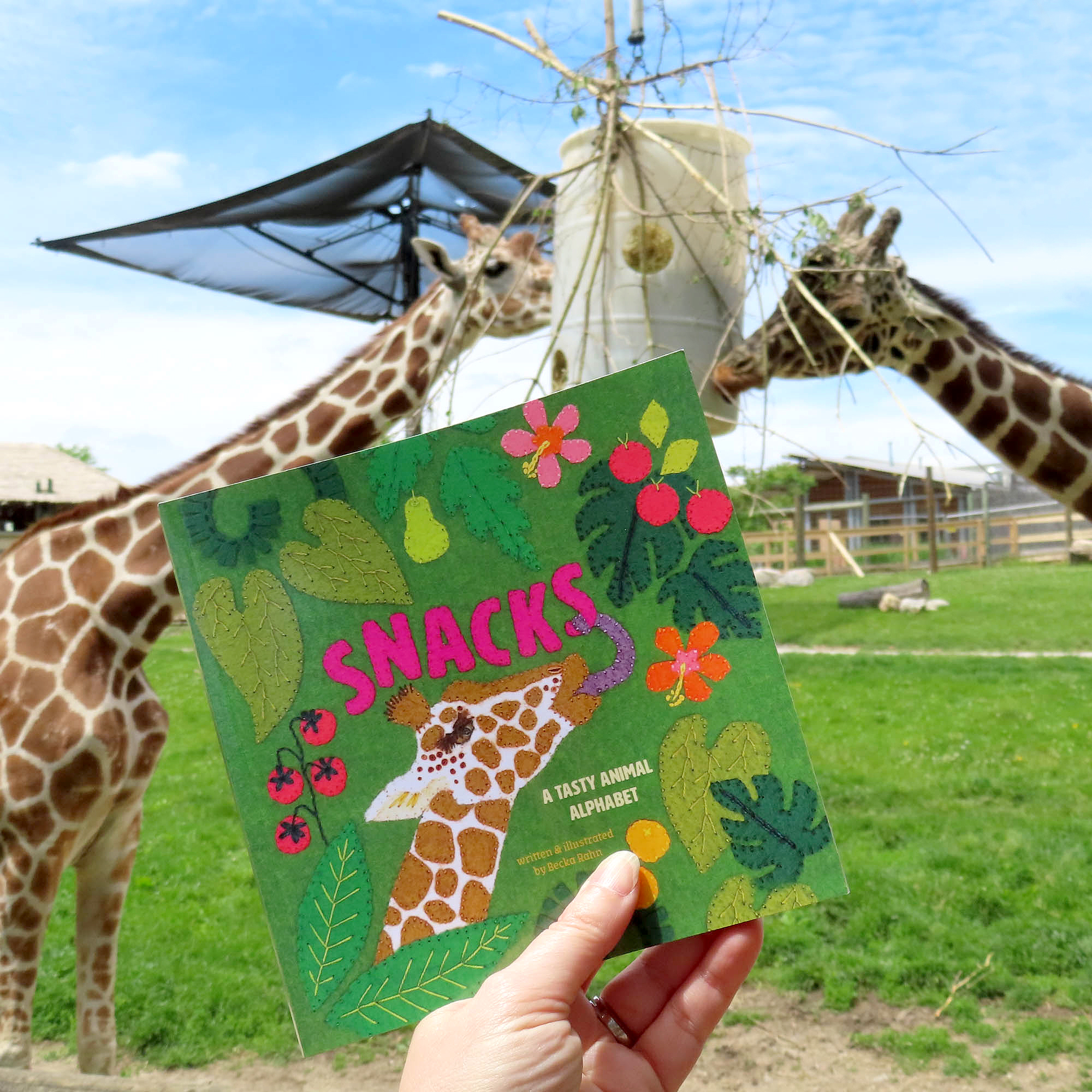
When I’m not teaching, you’ll find me creating books, exploring paper art, and diving deep into all things fiber art (with a healthy dose of creative geekery).

Shop my art

Featured Video Class

Frog & Dragonfly Basket

Latest Art

When Vexed

Recent Comments

Go to Top