When I am designing embroidery projects, I am always thinking: what can I do that isn’t flowers? There’s nothing wrong with flowers, but there are a lot of designs out there that are just pretty florals and I get bored stitching them. So when I taught the woven wheel stitch to my embroidery class, I wanted us to make something that wasn’t a rose. So I came up with a turtle shell! You can learn how to stitch this tiny turtle on lilypad coasters in my Tiny Turtle Coasters Tutorial that is up at Benzie Design.
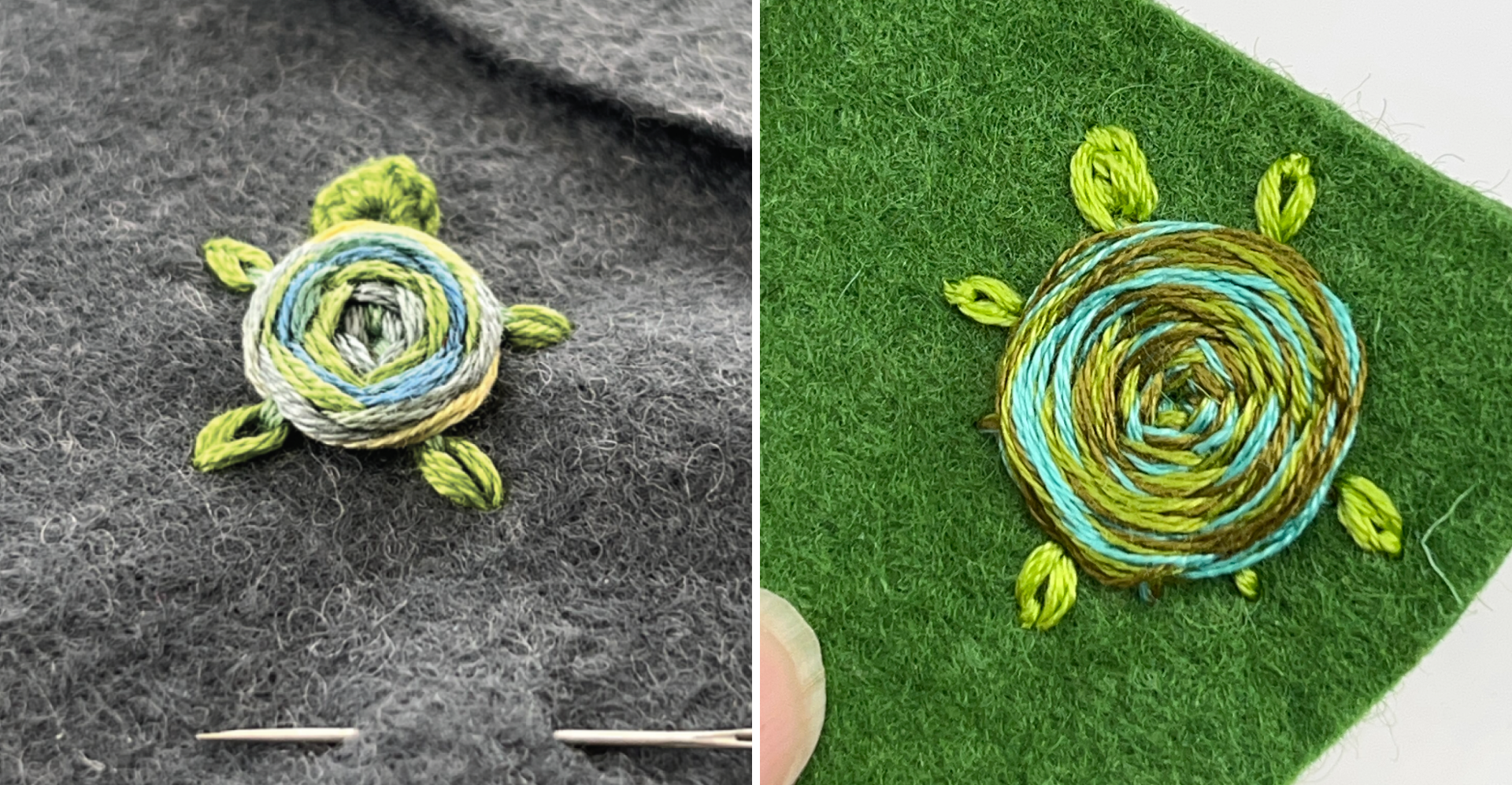
In the photo above there are two slightly different variations of that turtle and I thought it was a great opportunity to talk about variegated threads because I think that’s a great choice for this turtle shell. The one on the left, I stitched with a commercially dyed variegated thread. I think it’s DMC color called Kismet. I used all 6 strands of embroidery floss to do the woven wheel stitch.
The version on the right I stitched for the Benzie Design tutorial. They don’t carry variegated colors of DMC, and I wanted to create a similar color effect, so instead I combined three different colors of thread in a technique called “tweeding”. Simply, you split apart the colors into single strands and combine different colors and thread them together in the same needle. For this example I used 2-2-2 strands of 3 shades of green.
You can see in the side by side comparison that they both create an interesting color effect in different ways. When stitching a woven wheel where the thread is woven around and around a set of spoke stitches, a variegated thread (left) tends to pool in colors. It will gradually shift from turquoise to green to grey making almost concentric rings of color spreading from the center of the shell.
When you stitch with a tweeded thread (right), the colored strands move around and twist with each stitch so that sometimes the bright green is on top and sometimes it’s the aqua. You get a more evenly distributed combination of colors in a much more random pattern.
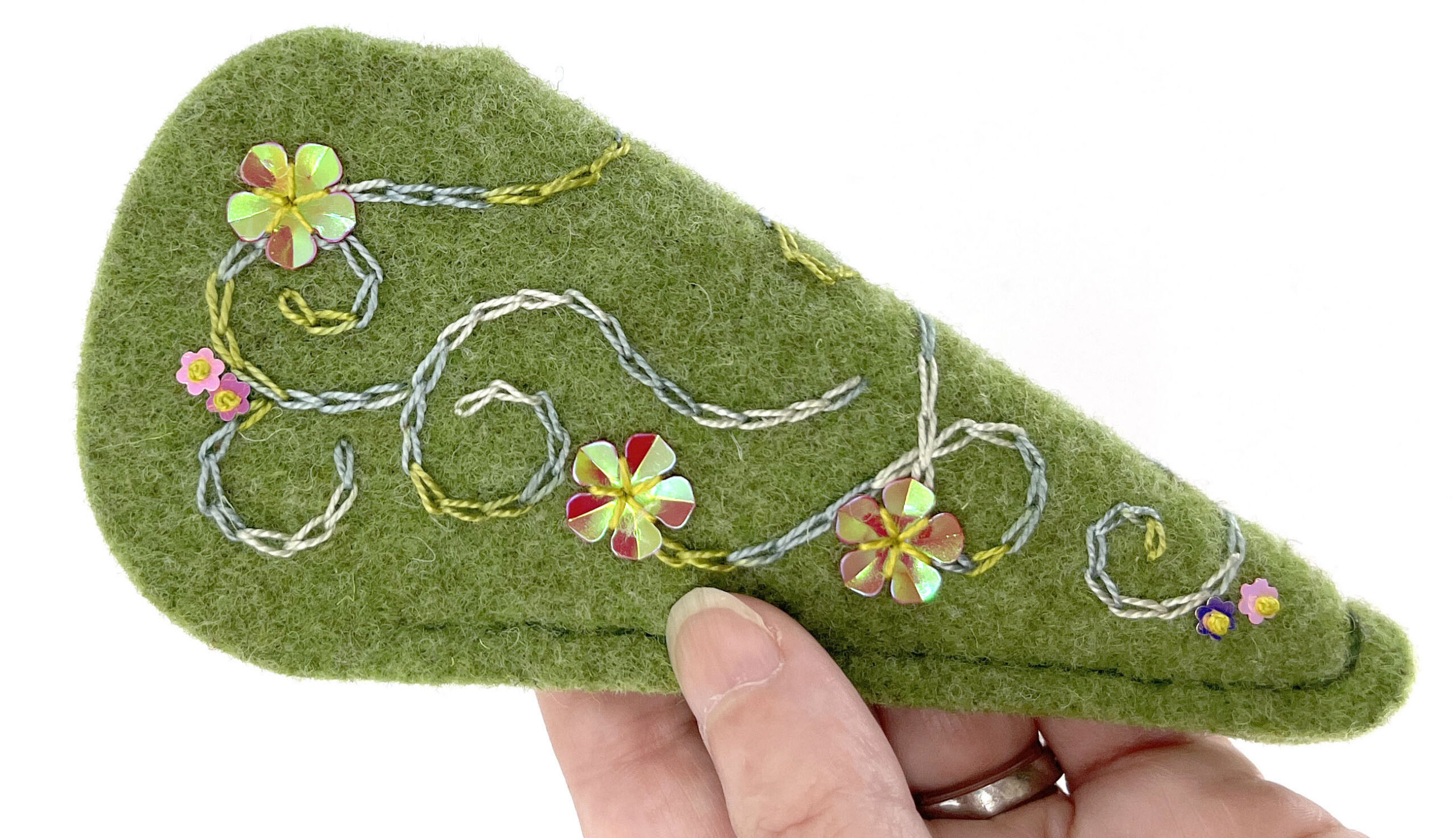
I love to stitch with subtly variegated threads because I think they add a lot of interest and depth to some very simple stitches. This scissors case is a great example. The vines are made in just a classic chain stitch with one color of thread (Wonderfil Eleganza Everglades) which is a subtle shift from lime to sage to grey.

Leave A Comment