
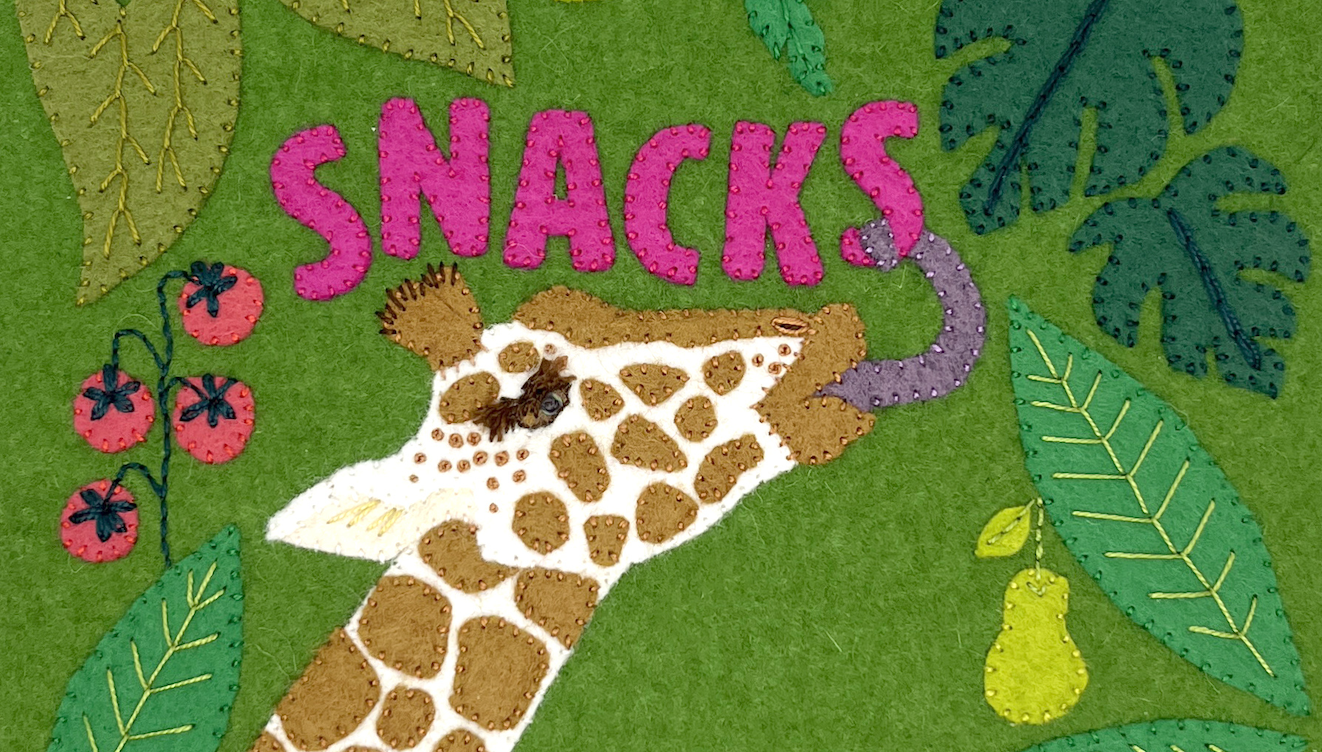
So sometimes the path to writing a book absolutely doesn’t start with the idea “I’m going to write a book.” In fact, I’ve now written and illustrated four books and none of them started out as a book at the beginning of the project.
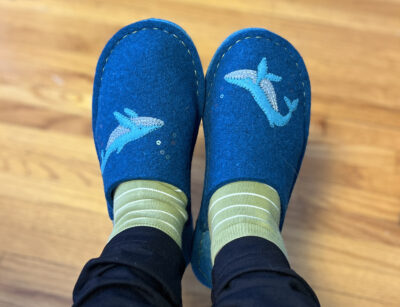 Snacks is the book I have been working on for the last year. Snacks started with slippers. Sometime in 2024 I ordered a beautiful felt slippers kits from a place called Joe’s Toes. I made them up and decided that they were a little plain, so I drew some felt humpback whales and appliqued them on the toes. They turned out really cute. They were such fun to stitch that I looked around and spotted felt eye glass cases made by the same awesome people. So I ordered some and made a few glasses cases for family and friends. My mom got a portrait of her dog, I made a green jay with edelwiess to celebrate my mother-in-law’s trip to Switzerland, my friend Goldfish Love Fibers got a goldfish.
I was having so much fun, I ordered some more felt. And I made a batch to sell at a local craft fair. I sold out in the first hours of the show. I made a few rules for myself: they had to be unusual animals; no cats and dogs. I wanted them to be the odd things that people love and not get trapped into making custom portraits of people’s pets. So I made tapirs, sloths, axolotyl, platypus, seahorses and yaks.

One afternoon, I decided to photograph them. I thought “I don’t know what I am going to do with these photos”, but I want to document them because I am doing so many different creatures. So that became part of the process: stitch the animal, photograph it, fold and stitch the case.
Then one day I made a list and realized that I had like 18 of the 26 letters of the alphabet represented. With just a few more odd letters like J and U, I would have an entire alphabet.
I’ve always loved alphabet books. I like that such a simple theme can become a story. So I decided to make the rest of the letters in the alphabet.
I’ve sold nearly all of the glasses cases that are the exact animals in the book. I decided that this was my most fun art recycling project yet! Make practical things for people to use and then use the photos to make something entirely new. I also love any reason to recycle my own art. For a long time, I have used parts of fabric designs as a texture in another. The previous books I mentioned all started as a completely different project and then I realized I had all the art, why not make a book?
So I stitched U (uromastyx, a kind of lizard) and J (jaguar) and all kinds of other animals in between.
How did it turn into a book?
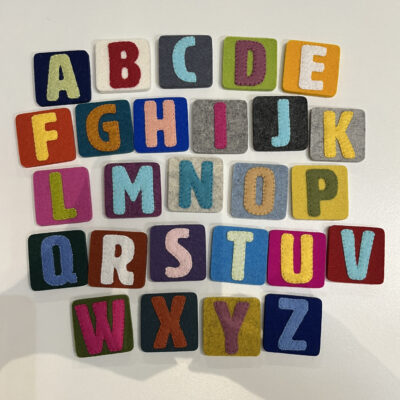 Once I had the alphabet idea, I knew I would also need to stitch the alphabet. That was my project last year at the annual open studio event I do. I stitched alphabet letters while I chatted with people. These were stitched on felt coaster samples. I like working on thick felt as a backing and so I tracked down some sampler packs on Etsy.
Before I was settled on book, I thought about making a postcard set with each animal and its letter as a postcard. But I put a survey in my newsletter and “make a book” got way more votes.
So, then I thought this book really needs a story. Just having the animal and a letter is kind of boring. It took me a few months to come up with the idea of “snacks”.
I was talking to my mom and remembering a trip to a zoo we were on together. The zookeeper told us about this little river otter who always pounced on the food bowl very first thing so she could grab the shrimp. She would eat the other things, but the shrimp were her favorites and she would shove everyone else out of the way to get to them. The story made us laugh and we still remember it years later. So I thought, I wonder if there are other stories like this. Animals who have favorite foods or treats that aren’t the foods that are listed in their official stats.
So many emails.
 I started sending emails. I researched and emailed dozens of zoos to ask about specific animals and their quirky snacks. I made sure that I was asking an easy question to reply to: an individual animal like a sea turtle and just one specific thing that their turtle liked to eat. I tried to explain that I wanted to know especially about their animals and not the wikipedia “what does this animal eat” answer. I told them I was an artist and I was planning to hand embroider all of the illustrations. I had a spreadsheet to keep track of who I emailed, what they said and other notes and comments.
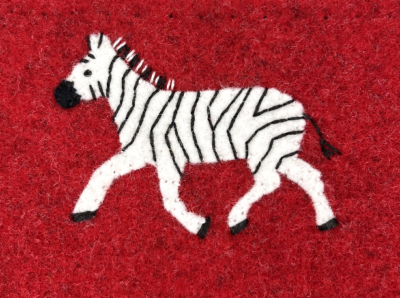
Fortunately some of those zoos responded right away and their staff thought that the project sounded whimsical and fun, just like I did. I got some delightful emails back with funny stories and details. You could tell that these zookeepers and education staff really loved their animals as individuals with personalities all their own. This was the most fun research I had ever done for an art piece! I would excitedly text my family “Zebras like tomatoes!” I expanded my emails to also include rescues and other animal rehab or welfare organizations in a quest to get a real answer for every one of my alphabet letters. One of my favorites was from a oceanlife rehab organization who had a female red-footed booby in residence. They said her favorite thing was squid and she would grab it from the staff person and shake it (like a dog does) and spray squid slime all over the face of her keeper. They affectionately dubbed it “getting a squid facial”. A large-and-friendly national aquarium said that their sea turtles loved vegetables but only the green ones. If you gave them red and green peppers, they would ignore the red ones. Two local zoos to me – Como Park Zoo and Bramble Park Zoo – were especially friendly and chatted with me back and forth about the idea and their animals. It was conversations like that which kept me inspired by this project!
Other emails weren’t as much fun. Some places never responded at all. A small number of them sent me a long legal referral email to the marketing department about partnerships and licensing. A few sent generic “we are too busy to answer questions” responses. Those were bummers. The funny thing was that you could really tell the places that prioritized learning and sharing their animals and the ones that were “corporate”. Sadly for me, several places had policies about not quoting or recognizing their zoo by name for answering questions like this. I had big plans to put a whole list in the back of the book with thanks to everyone who helped, but I had to leave that out at their requests.
Finally I stitched the snacks; thanks to my spreadsheet of notes! I decided to put them on small pentagons and the letters on rounded squares so there were some shape hints in the book too (ie you know to look at the pentagon for the snack).
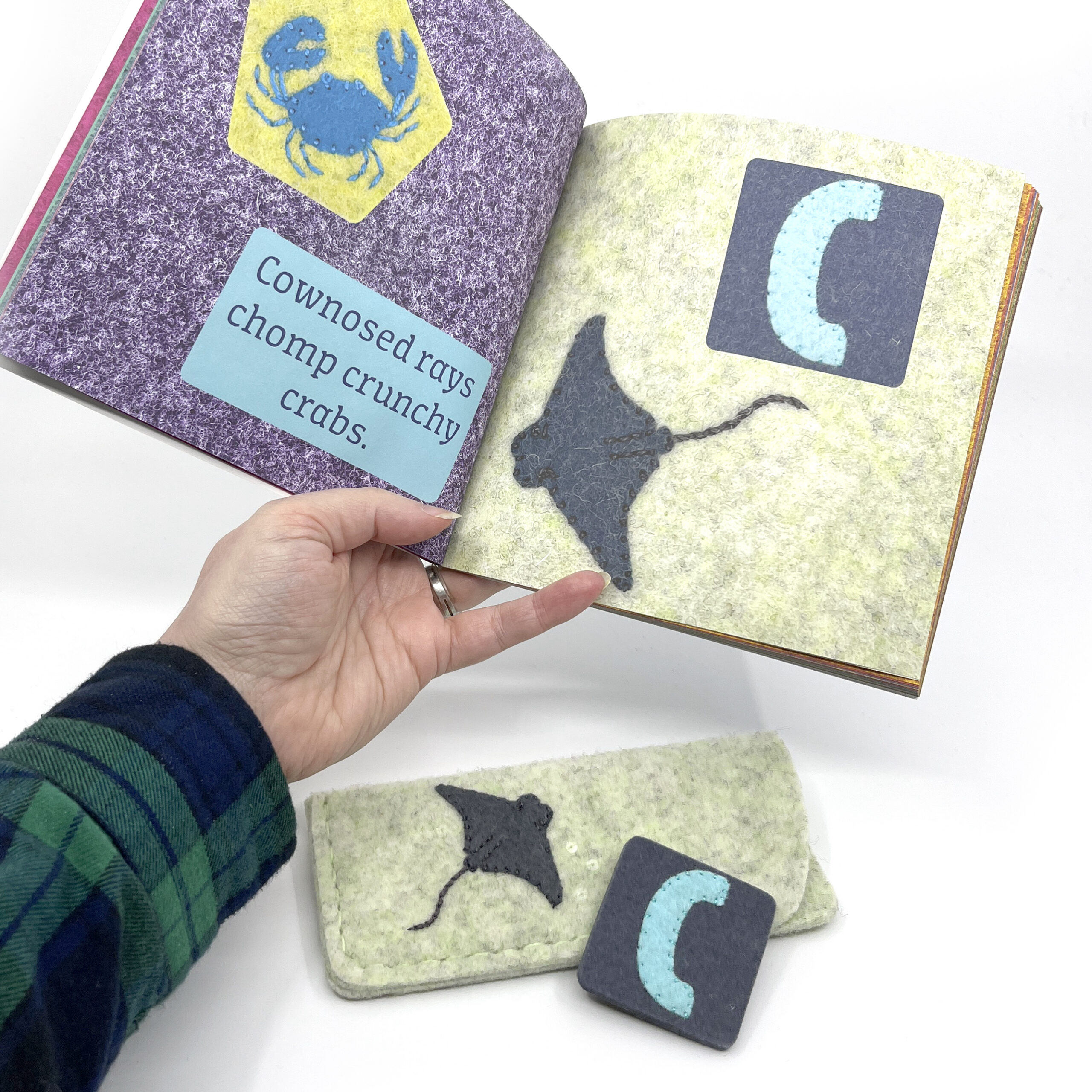
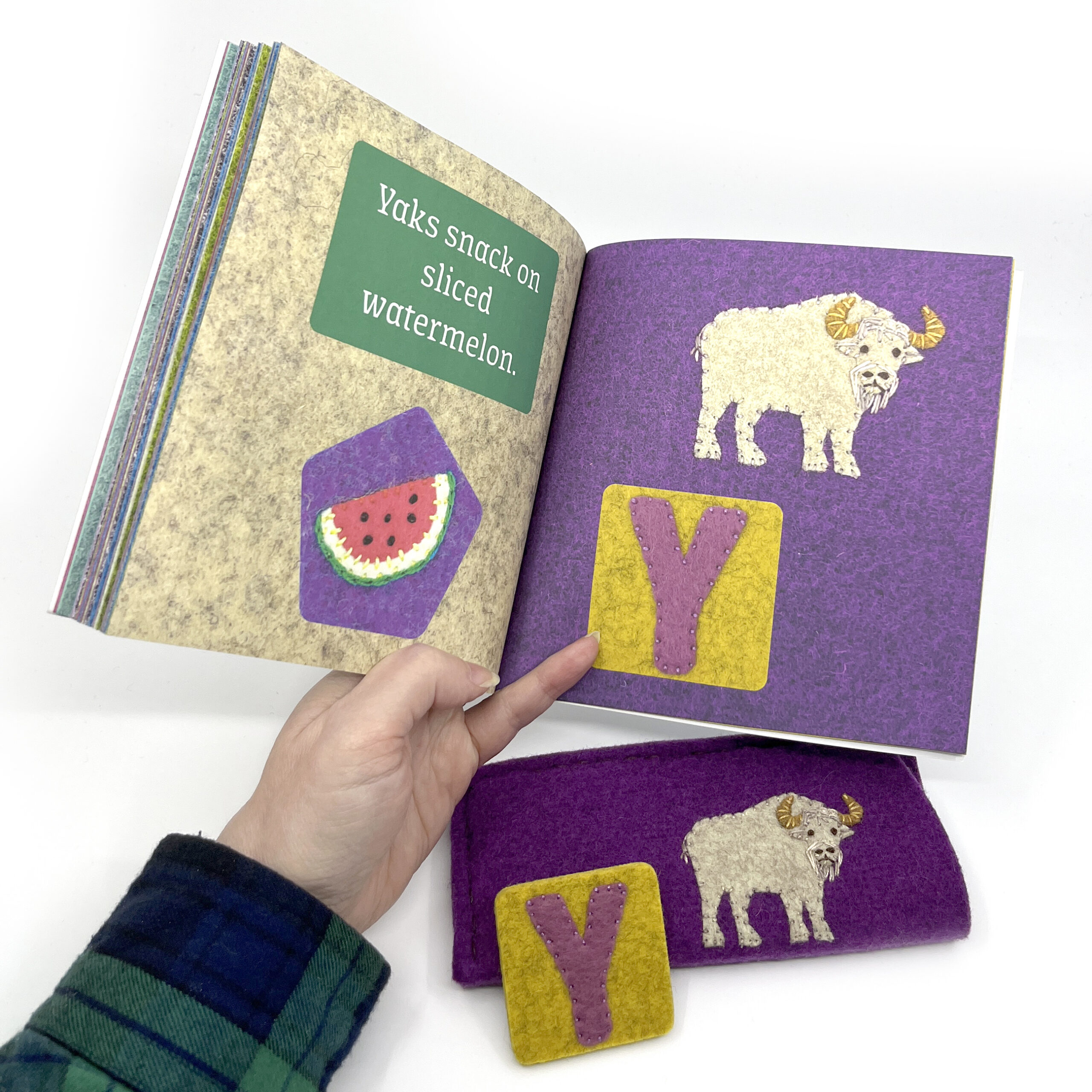
I didn’t realize it at the time, but I wrote a non-fiction book! I drew my animals using a lot of reference photos from zoos, which I decided was a more reliable source than Google, which is so full of AI slop that I don’t trust it to be really a true representation. Every one of those snacks I stitched was because I talked to someone knowledgeable about that animal.
Making the book pages.
I put together each page in Photoshop. Looking back, I don’t think I would ever have sat down and embroidered all 64 pages worth of illustrations one by one. But since I did them as a whole series of other smaller projects, they were really easy to assemble. I have used the photos of the letters for several other projects already and I am planning to make an alphabet animal fabric panel/design too. I love how versatile they are.
Once I had settled on snacks as the theme, I wrote out the text for the book identifying the animal and its snack. My family helped me brainstorm 26 different words for eating something so each letter had its own verb to go along with it.
Armadillos slurp creamy peanut butter.
Boobies nibble squishy squid.
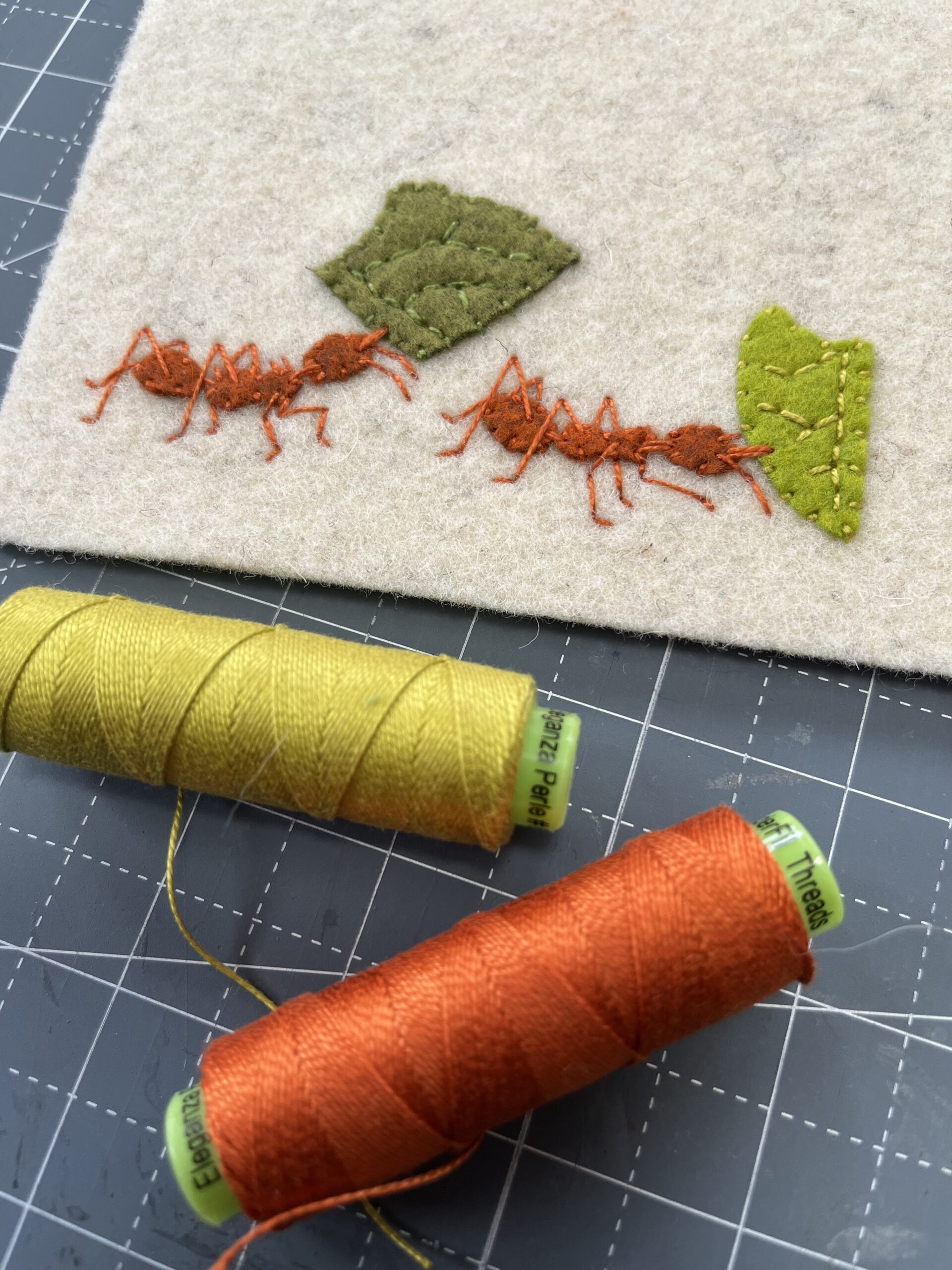
Every snack also has an adjective, often with alliteration or just because I thought it was fun to read out loud. I also realized I needed a little intro and conclusion for the story so I stitched a few more illustrations specifically for those pages. I decided that leaf-cutter ants would be a great illustration for the page where I talk about how I made the illustrations by cutting up and sewing together felt.
All together there are 95 different stitched pieces plus the cover!
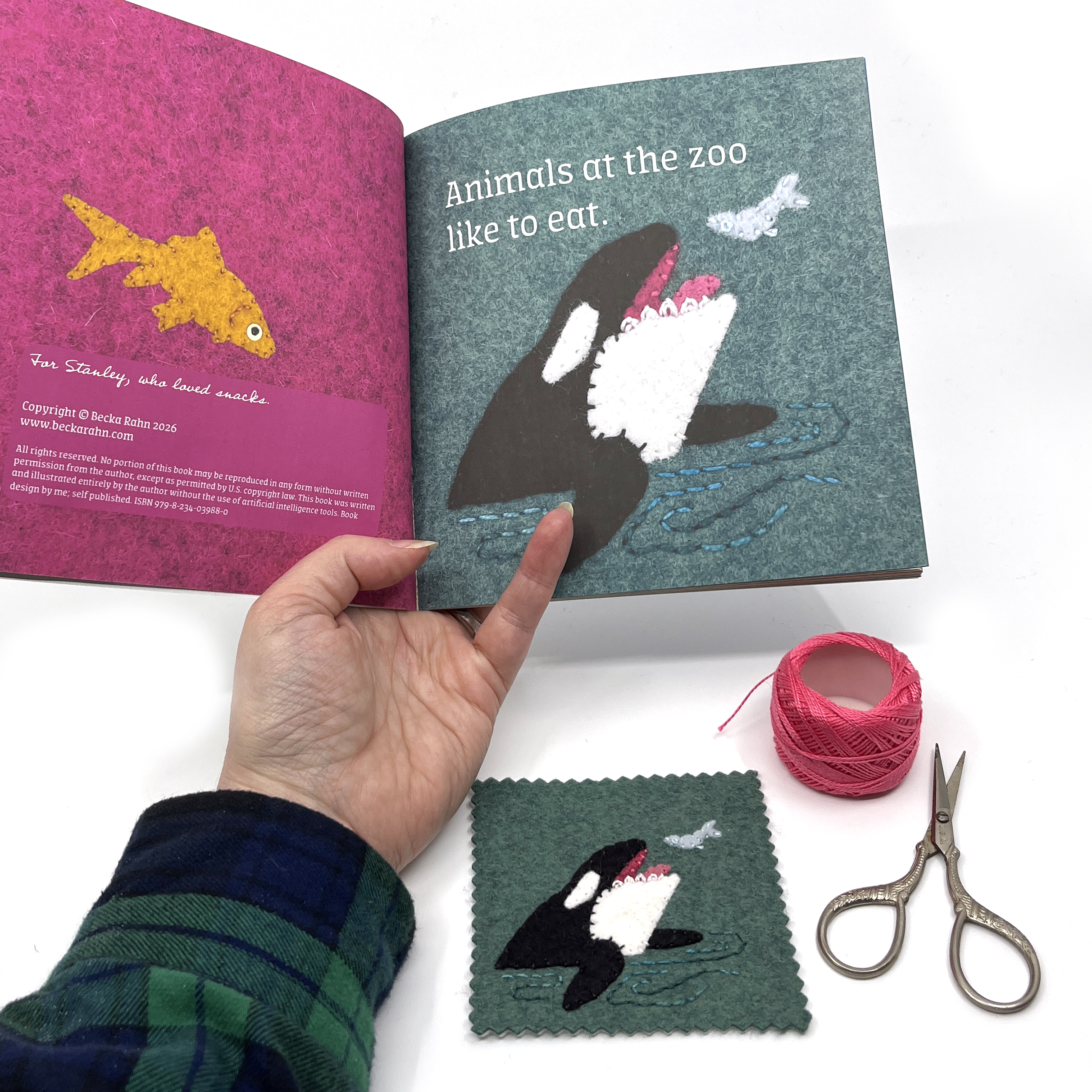
For those that enjoy the technical details, I decided to print the book with Ingram Spark, who are a huge indie book publisher. I approached several print companies about trying to get it done locally and the cost was just too high. Because I am self-publishing, I have to pay all the costs myself up front. One place was really great and gave me a quote of about $14 per book, but in order for me to be able to make anything to pay myself, I would have to mark it up to a place that doesn’t make sense for a paperback kids alphabet book. Ingram was able to print it for about half that price. I purchased my first ISBN number so this one credits me as the publisher. (I printed previous books differently and they handled ISBNs in a different way). I should be able to make it available for bookstores and libraries to be able to order it but I haven’t set that up yet.
If you are thinking about printing with them, I have been pretty happy with what I have gotten but its *hard* to make sure you follow all the specifications and directions correctly and they have terrible customer service. It’s frustrating and they aren’t very friendly. I had two mis-print problems with the proof copy of my book. One was my error, which I fixed without their help and the other was 100% their fault and they have not yet responded to my support ticket. I’ve got a second proof that is great and I ordered a case of books and I have all of my fingers crossed that they are awesome when they arrive. (This is why I am not taking pre-orders. I don’t quite trust it until I see it.) Hopefully I will have them in the next couple of weeks.
Leave A Comment