
Spoonflower announced a sort of re-branding this week and I was thinking back about my relationship with Spoonflower over the years. If you’ve taken a class from me, you might have heard some of my stories, but I was on the beta-test list back when Spoonflower was basically just an idea and a single ink-jet printer. I’ve still got that first yard of fabric that I printed. We wrote The Spoonflower Handbook a few years after that. I’d like to think Spoonflower and I were still friends these days, although I don’t think I even know anyone who works there anymore. It’s been a lot of years and rebrands since then; I’m sure they’ll never see this post.
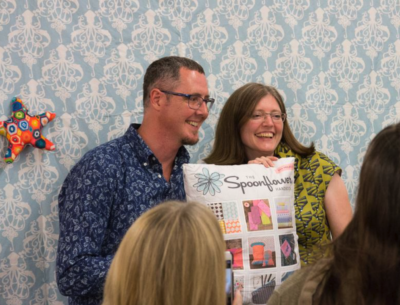 I met Spoonflower’s co-founder, Steven, because I was an assistant at a class he taught here in Minneapolis for the Surface Design Association. In class, we were making dinner napkins from crayon drawings. Yes, a big national conference workshop and we were drawing with crayons.
And that got me thinking about what I wish people knew about designing fabric. In the time since we wrote the book, the marketplace for teaching people about fabric design has boomed in epic proportions. I got to teach exactly four “master classes” at Spoonflower with about four dozen awesome students. (Some of them I still talk to! Shout out Anne and Mary and Carolyn!)
Now there are teachers working with thousands of students (and making many many dollars) teaching all of the secrets of fabric design. I’d love to be one of those super internet-famous successful teachers, but the reality is that I’m not. And that’s because I don’t believe there are any secrets. There’s no magic formula. There’s no one right way. There’s no must-have tool. And that’s not a great hook for selling a thousand dollar class.
When we started out teaching about Spoonflower, it was with crayons, because honestly, you can make some abso-freaking-lutely amazing designs with crayons. Or colored pencils or paint or recycled paper or block prints.
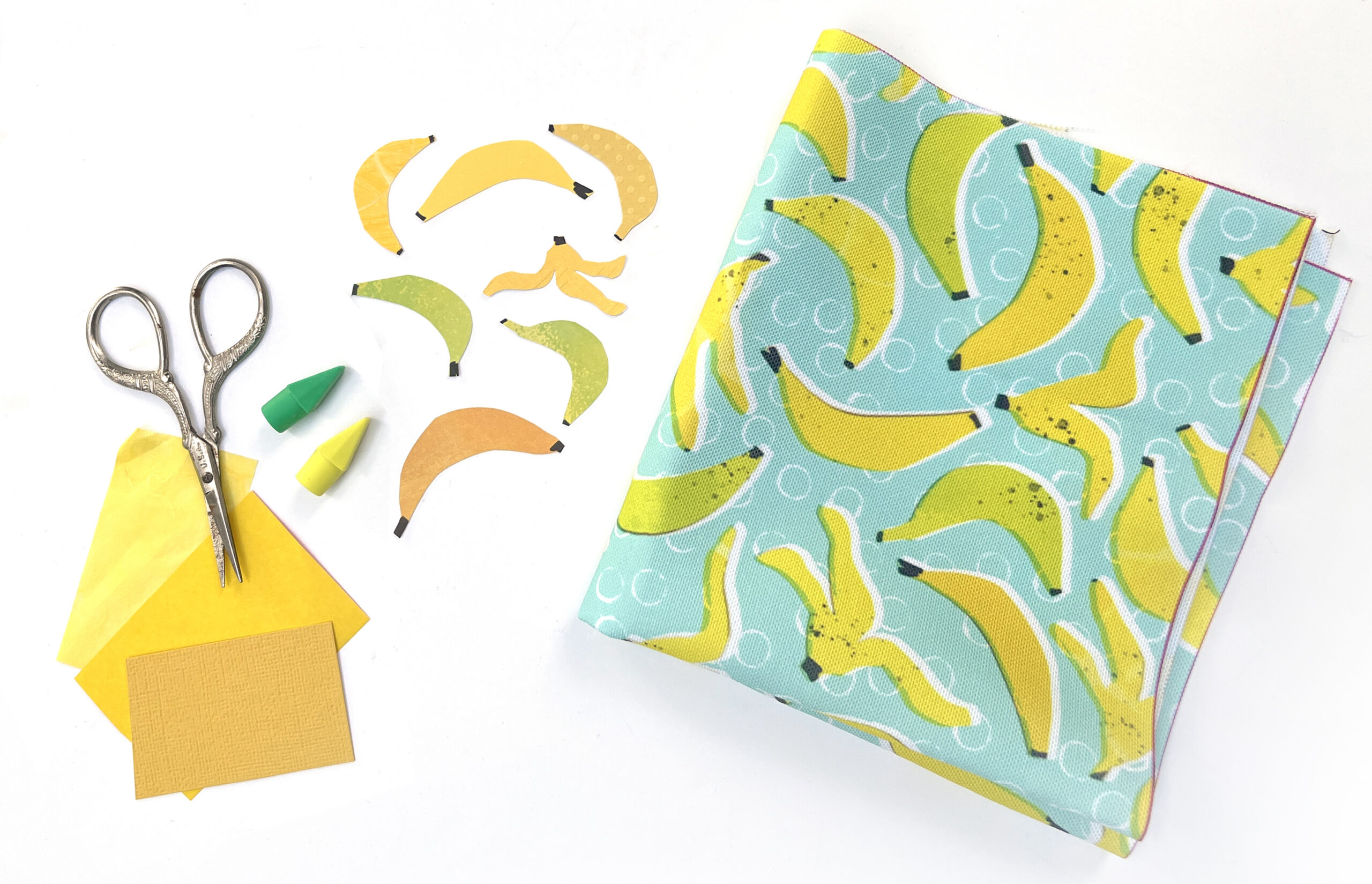
That bananas design up at the top of the post is a great example.
- I made the bananas from scraps of yellow paper: envelopes, scrapbooking paper, junk mail.
- I spatter painted some black ink on a piece of paper and scanned it.
- I made a rubber stamp out of a pencil cap eraser and made a pattern of open polkadots and scanned it.
- I colored the black tips on the bananas with a sharpie and scanned them.
- I put all of those together in layers in Photoshop and added the aqua background.
That’s a piece of the printed fabric you see in the photo. If you set down the device you are reading this post on, you could do almost all of those steps right now with just that much vague description from me.
What about the next step?
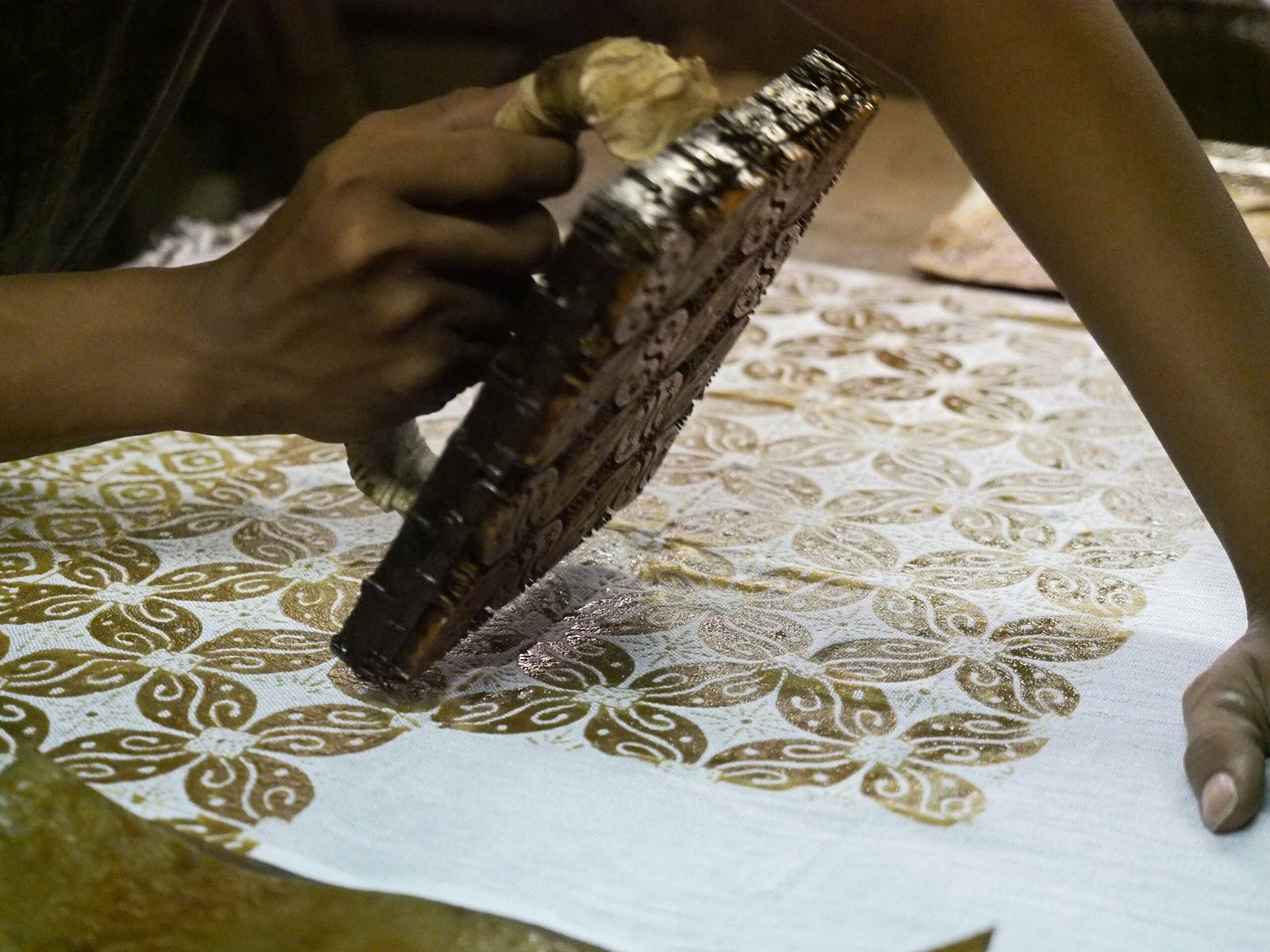
People have been making seamlessly repeating patterns, ie the kind you need to make fabrics look right, since before the Industrial Revolution. There’s nothing high-tech about it. Shout out to Agto Nugroho on Unsplash for the photo of someone printing a seamlessly repeating pattern carved out of a block of wood. I made the bananas into a seamlessly repeating pattern by essentially moving them around until they looked good. I used Photoshop, but I didn’t need Photoshop to do it. I could do the same thing using a freebie app on my phone. (Although I will be honest, that would be a lot harder for me.)
Why did I make bananas?
I could tell you something about researching trends or keywords or things like that, but it’s a much simpler reason. I was at a knitting conference show selling my work and someone asked me “Do you have a bag with bananas on it?” And I said: I don’t, but I can. So I did. It’s been a really popular design. I like it because it’s quirky and colorful. There was no marketing department pitch or having to get the creative director to sign on to it. I just designed it because it sounded like something I’d like.
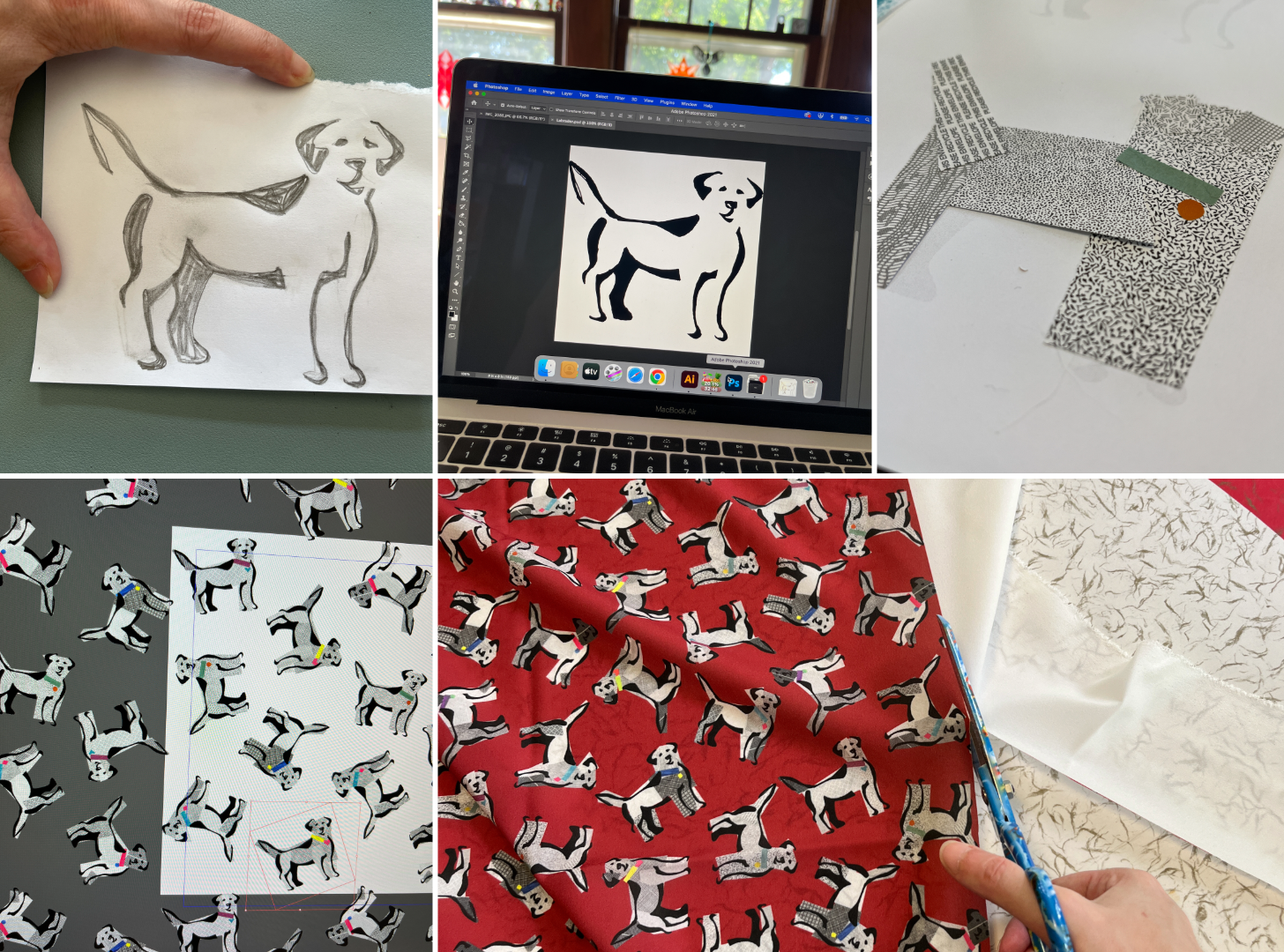
Here’s another great example.
This Walk the Dog design started as a pencil drawing.
- I refined and cleaned it up in Illustrator.
- I “colored in” the dogs with collages made from security envelopes and scrap paper.
- I made a repeating pattern and added the background color.
- I printed the fabric.
Why the dogs and the red background?
At the time I was selling a lot of scarves made from my fabrics and many people love dogs and love red. I don’t like red so I don’t use it alot, but it was a great way to get a color into my collection that I wouldn’t have picked otherwise.
You are probably thinking “there’s a little more to it than that, Becka!” You aren’t wrong. And if you are super excited reading this and don’t know how to start, then that’s what my class Spoonflower Step One is for. I explain all of the things I glossed over in those bullet points. If you wanted to make a design like Walk The Dog, then A Trio of Techniques for Designing Fabrics digs a little deeper into that process.
What do I wish people knew about fabric design?
The important part is making something.
You don’t need to buy more tools or apps. You can start with crayons, paper scraps, paint, a rubber stamp, a pencil—or whatever you happen to have nearby.
You don’t need to know exactly what you’re doing. Make something interesting first. There is no ideal pattern size or color palette.
You don’t need to design for everyone. Make the thing you want to see in the world. Someone else might want it too.
You don’t need to follow the rules. In fact, there are no rules. There are lots of ways to make a successful fabric design, and most of them started with someone trying something that wasn’t in the instructions.
I think that’s the thing that has gotten lost along the way: experimentation and curiosity. That’s probably the biggest thing I’ve learned—and tried to teach—about designing fabric. There aren’t really any secrets. There is just making something, seeing what happens, and being curious enough to make the next thing.
I love your approach to doing and teaching fabric design!
I do too! I wish I got to teach it more than I do.
Yes! Yes! Yes!
I don’t think my comments support emoji, but imagine three red hearts right here.